

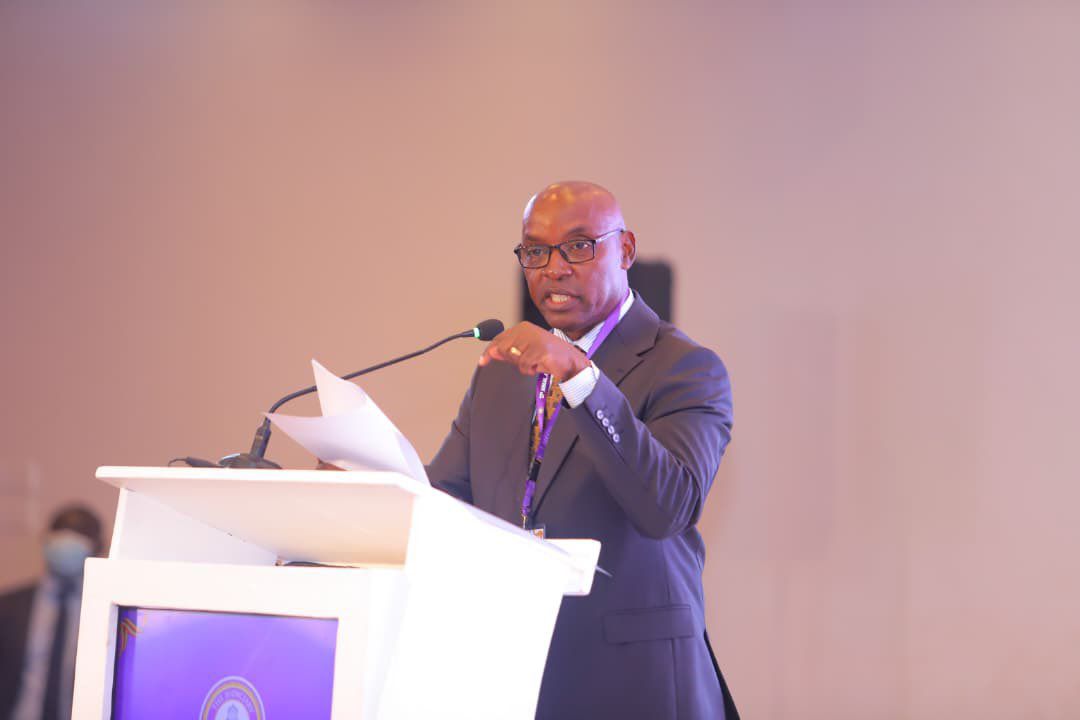
Chief Justice Flavian Zeija has flagged judicial burnout, insecurity for court users and officers, persistent case backlogs, and weak court leadership practices as major threats to effective justice delivery in Uganda.
Speaking at the 27th Annual Judges’ Conference on Monday, Zeija said mounting pressure on judges—including heavy workloads, isolation, and safety risks—directly affects the quality, speed, and consistency of judicial decisions.
“Justice is delivered by human beings, and the quality of justice we render cannot be separated from the wellbeing of those entrusted with it,” Zeija said, highlighting the conference theme, Judicial Wellness as a Tool for Effective Case Management.
He recounted the psychological toll of presiding over a gruesome murder trial, warning that exposure to graphic evidence can have lasting mental effects.
Zeija also cited a UNODC Global Judicial Integrity Network study showing that 76 percent of judges worldwide do not maintain optimal physical and mental wellbeing due to burnout, excessive workloads, and stigma around stress.
To address these challenges, Zeija called for institutional recognition of mental health and urged the Judiciary to annually observe July 25 as the International Day of Judicial Wellbeing.
The Chief Justice also raised concerns over access and safety, noting that only about 10 percent of potential litigants currently access Uganda’s courts.
“If even 20 percent of Ugandans decided to come to court, we would be overwhelmed,” he said, stressing the importance of efficiency, discipline, and alternative dispute resolution mechanisms.
He highlighted the risks faced by judges serving island communities, revealing plans to acquire judiciary-owned boats and construct courts near the Uganda–Tanzania border to improve access and security.
On human resource development, Zeija criticized ad hoc training and called for structured, results-oriented programs, alongside renewed focus on staff welfare and integrity.
“Judicial independence does not insulate us from accountability,” he said, warning against corruption, absenteeism, poor time management, undue adjournments, and delayed judgments.
Zeija emphasized that judges are leaders as well as adjudicators, noting that court heads’ conduct shapes public perception.
“The people of Uganda are the ultimate beneficiaries of our labour,” he said, urging participants to reflect on their performance and wellbeing, and recommit to humane, efficient, and accountable justice.
